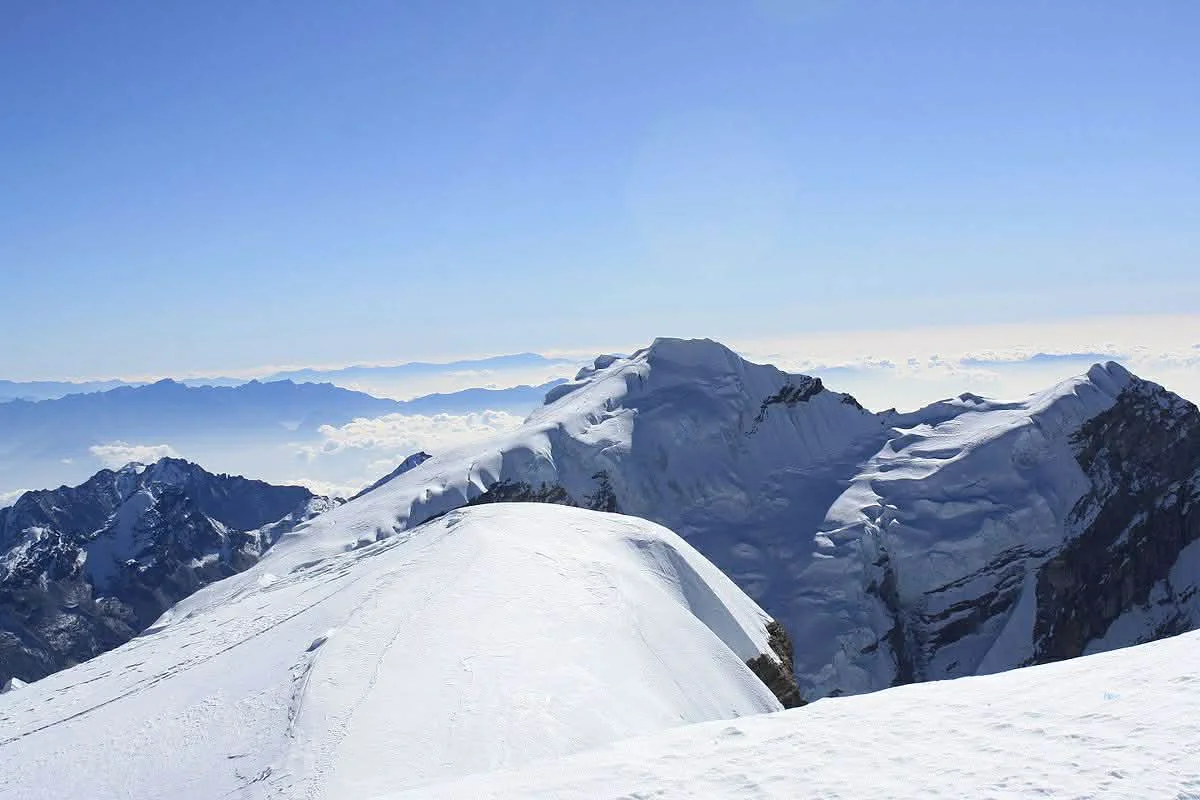
Mera Peak vs Island Peak – A Complete Guide for Climbers
November 17, 2025
Planning a Trip to Nepal?
Planning to climb a trekking peak in Nepal? Discover everything you need to know about Mera Peak vs Island Peak – from difficulty levels, best climbing seasons, costs, itineraries, views, gear checklist, training tips, and safety guidelines. Compare these two iconic 6000 meter peaks in details to choose the perfect adventure for your next Himalayan expedition in Nepal.
Mera Peak (6476m) and Island Peak, also known as Imja Tse (6189m), are two of the most popular trekking peaks in Nepal, both classified by the Nepal Mountaineering Association as “Group B” climbing peaks.
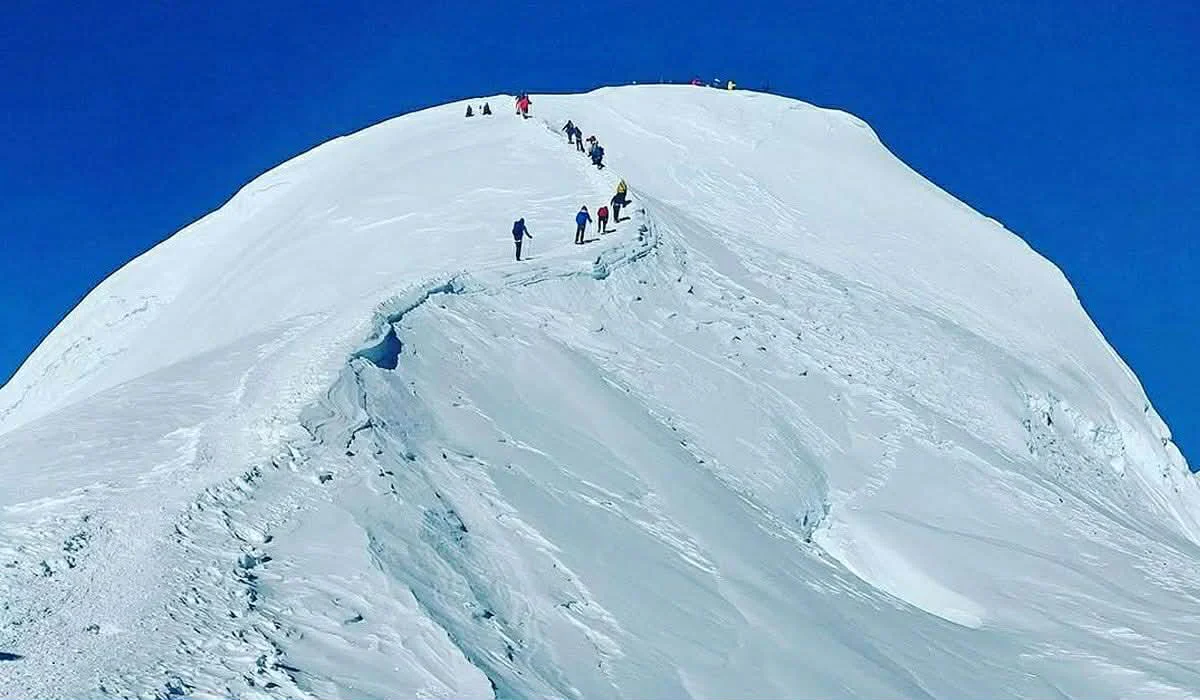
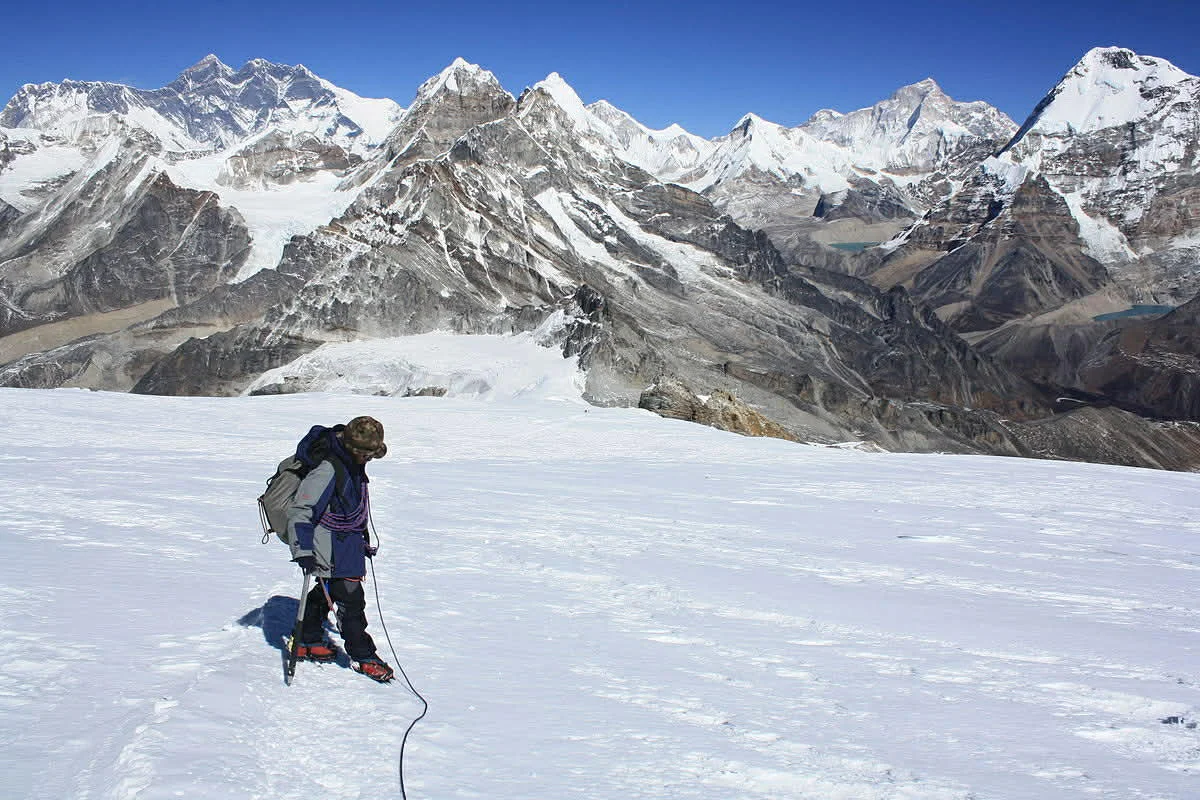
Mera Peak is the highest trekking peak in Nepal, famous for its relatively non-technical ascent and breathtaking 360° summit panorama that includes Everest, Lhotse, Makalu, Cho Oyu, and even Kangchenjunga on a clear day. Mera demands more days due to its remote approach and higher altitude.
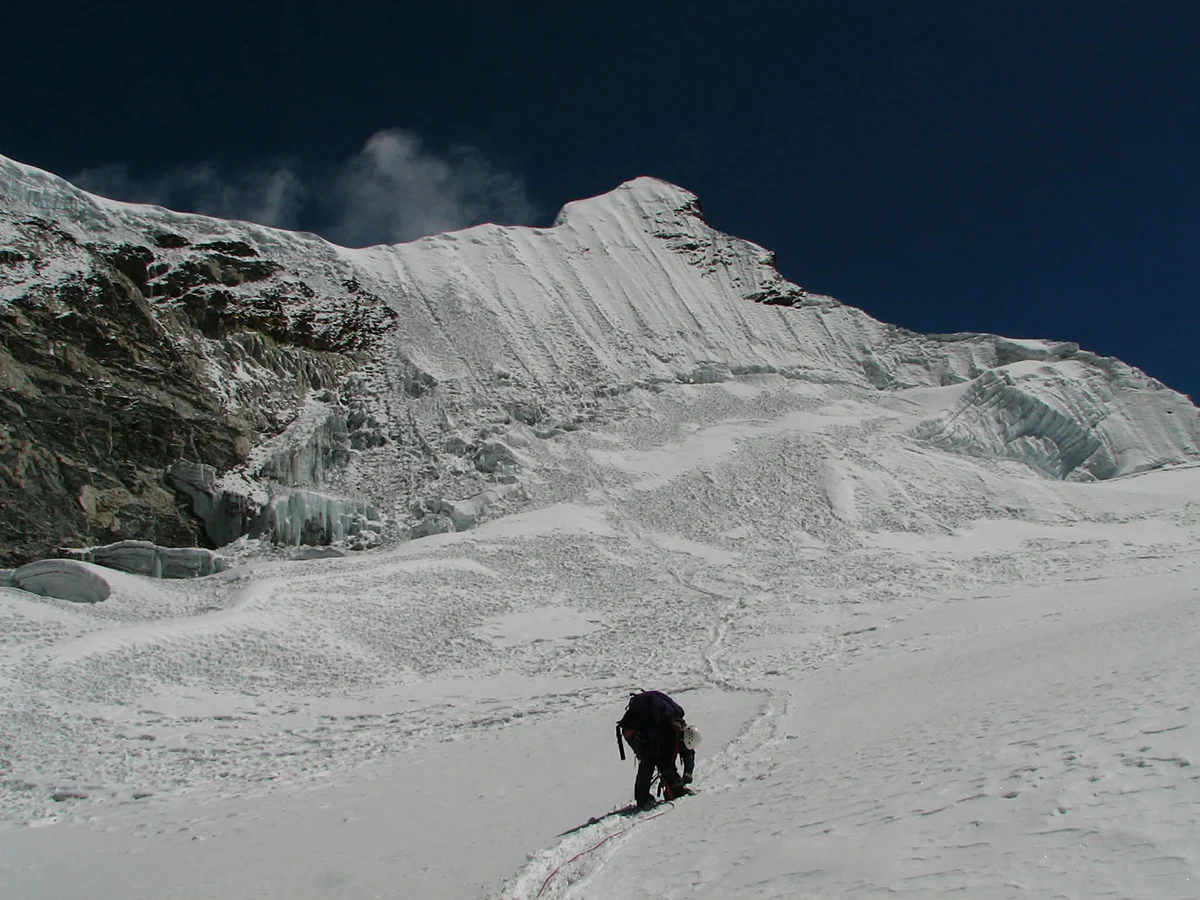
Island Peak, located in the Everest region, offers a shorter expedition that combines perfectly with the Everest Base Camp trek, making it ideal for trekkers who want to add a climbing challenge. Island Peak requires more technical climbing skills, including fixed rope, crampon, and ice axe use on its steep headwall and narrow summit ridge. Its prime selling point is the spectacular close-up views of Ama Dablam, Lhotse and Everest because the approach sits inside Sagarmatha National Park.
Both climbs require official climbing permits and national park entry fees, with costs ranging from USD 1,500–3,000 depending on duration, logistics, and group size.
Category
Mera Peak
Island Peak (Imja Tse)
Elevation
6476m
6189m
Location/Region
Hinku/Mera–Barun area, southeast of Everest region (approach options via Lukla or Phaplu)
Imja Valley, inside Sagarmatha (Everest) National Park, approached via Lukla-Chhukung/Dingboche
Semi–technical: glacier travel, exposed ridge, short fixed–rope/abseil–sections (PD/PD+). Requires basic rock/ice scrambling and comfort on exposure
Permits & Paperwork
Peak permit (via Nepal Mountaineering Association+NMA rules), local permits. Fee structure depends on season and NMA schedule
Sagarmath NP entry + local rural municipality fees + peak permit (seasonal prices reported). Must register and follow park rules
Trek & Climb Duration
18–22 days total
14–19 days total (including trek & summit push)
Typical Climb Days
3 summit push days
1–2 summit push days
Best Season
Spring & Autumn (Apr–May, Sep–Nov)
Spring & Autumn (Apr–May, Sep–Nov)
Panoramic Views
360° panorama: Everest, Lhotse, Makalu, Cho Oyu, Kanchenjunga
Close-up of Lhotse/Everest walls, Ama Dablam
Which is Harder-Technical Difficulty
Island Peak usually requires more short, technical scrambling and fixed-rope work on a steep headwall and narrow summit ridge; clients are often roped for the final section. Mera Peak’s standard routes involve long glacier walking and crevasse awareness, and recent changes to the summit block can add a brief PD (not-very-hard) technical section-but most of Mera is less steep and more sustained altitude than technical climbing. In short: Island Peak is punchy-technical; Mera is longer and more altitude-intense.
Best Time to Climb
Spring (Mar–May) and Autumn (Sep–Nov) are the prime windows for both peaks-stable weather, clearer skies and calmer winds. Winter is possible for very experienced, cold-tolerant teams; monsoon (June–Aug) brings heavy snow/avalanches and low visibility so it’s usually avoided.
Permit & Regulation Essentials
Both peaks require official peak-climbing permits handled through a registered Nepali operator like us Raj Bala Treks & Expedition. Island Peak sits inside Sagarmatha National Park (additional park entry and TIMS/trekking permits apply on the Everest route). Mera Peak also needs an NMA (Nepal Mountaineering Association) permit and paperwork submitted by your operator.
Note: Nepal has been updating permit fees and regulations in recent seasons-always confirm current fees with your operator before booking.
Cost Comparison
Island Peak packages (including Lukla flights from Kathmandu, guide, staff, permits, basic group climbing gear) commonly fall in a moderate range because many teams combine the climb with Everest Base Camp treks-you will often see packages from ~USD 1,500–2,500, depending on group size and service level.
Mera Peak is typically more expensive because it’s more remote (longer expedition length, extra logistics)-typical packages are ~USD 2,000–3,000+. Exact numbers shift with fuel/flight costs, permit changes, and your operator’s inclusions.
Typical Itineraries (sample durations)
Island Peak (classic) — 12–16 days from Kathmandu: fly to Lukla → trek via Namche, Tengboche → EBC/Chukhung area → Chukhung Base Camp → High Camp → summit → return to Lukla → Kathmandu. Summit push often done as an early-morning ascent from High Camp.
Mera Peak (classic) — 16–21 days: Kathmandu → Lukla (or Phaplu for some routes) → trek into Hinku/Hongu valleys → Mera Base Camp → Amphu Lapcha / High Camp approach depending on route → summit → back out. Mera itineraries require additional acclimatization days and more trekking days to reach the base of the peak.
Summit Views & Scenic Highlights
Mera Peak: arguably the best summit panorama of any trekking peak-summit views of five 8000m mountains in one sweep (Everest, Lhotse, Makalu, Cho Oyu, Kanchenjunga) on clear days. If your primary goal is a big-mountain, cinematic panorama, Mera often wins.
Island Peak: dominates the Chukhung/Imja valley skyline and places you right in the Everest region’s iconic scenery-Ama Dablam, Lhotse, Nuptse and Everest are visually dominant from the final ridge. The narrow summit ridge makes for dramatic summit photos.
Who should pick which peak?
Choose Island Peak if: you want a shorter itinerary, you are already doing the Everest Base Camp trek or want to combine them, you don’t mind a short technical headwall and fixed ropes, and you prefer a well-trodden classic.
Choose Mera Peak if: you want a higher summit and extraordinary panoramic views, are comfortable with longer trekking days and remote logistics, and want to test sustained high-altitude performance rather than short technical climbing.
Risks, Safety & Acclimatization
Altitude is the single greatest risk: both peaks exceed 6000m where AMS (acute mountain sickness), HAPE and HACE are real concerns. Proper acclimatization-gradual gain, rest days, hydration, and turning back early if symptoms appear-is essential. Both peaks require experienced local guides; Island Peak usually mandates a rope-trained guide for the summit section. Carry a reliable satellite/phone emergency plan and ensure insurance covers high-altitude rescue/evacuation.
Essential Gear Checklist (high-level)
Insulated down jacket, double-layer sleeping bag rated to −20°C, crampons, ice axe (usually provided by operator but bring your own if you prefer), harness, helmet, small daypack for summit push, sturdy 6000m boots, goggles, sun protection, headlamp, personal first-aid + altitude meds (acetazolamide if prescribed), water purification. Operators typically supply group ropes, tents, and some technical gear.
Sample Packing + Training Tips
3 months out: build aerobic endurance (hiking with 10–15 kg packs), stair/climbing intervals, and specific leg strength. Add a few long weekend hikes at 4–5 hours with heavy packs.
2–4 weeks before: taper training, focus on sleep, nutrition and acclimatization practice (if possible). Consider a pre-expedition hypoxic course or a guided lower-altitude trek to see how you respond to altitude.
On trek: keep daily elevation gain moderate, avoid alcohol, eat high-carb meals and sip fluids continuously.
They are accessible to fit, attentive novices with good operator support-but they’re not casual treks. Prior high-altitude trekking experience raises your chances of success.
Mera peak is generally the more suitable option for strong beginners with good fitness and basic training in crampons and ice-axe use. Island peak requires confidence on steep snow/ice and experience with fixed ropes.
For Island Peak, basic crampon and fixed-rope training is required. For Mera Peak, glacier travel, crevasse rescue awareness and crampon use are essential. Operators give pre-summit training days.
Both peaks require NMA permits and must be arranged through a registered Nepali operator; Island Peak has added park/TIMS requirements because it lies in Sagarmatha National Park. Always verify permit fees and paperwork with your operator as fees changed recently.
Both have normal Himalayan mountaineering risks which are altitude sickness, crevasses, cold and weather changes. To be specific, Mera peak has lower technical risk and higher altitude risk. Whereas Island peak has higher technical risk and lower altitude risk.
The summit headwall involves 40-55 degree snow/ice slope, climbing using fixed ropes, jumars/ascenders and crampons on steep terrain. Climbers must be comfortable with rope systems.
Yes, in Kathmandu and Namche Bazaar you can rent crampons, ice axe, harness, climbing boots, helmet, down jacket & sleeping bags. However, high quality boots for cold conditions are brought from home.
Helicopter evacuation is possible from both regions as easier and faster for Island Peak due to high traffic and helicopter networks in the Khumbu. For Mera Peak, evacuation is still possible but depends heavily on weather and landing zones.
Mera peak feels more like a mini–expedition due to remoteness, fewer climbers, and more tented nights. Island peak is more commercial and integrated with the Everest trekking route.
For Island peak, there is 1 guide for every 2-3 climbers. And for Mera peak, there is a 1 guide for 3-4 climbers.
Conclusion
Pick Mera if you want higher altitude, broader panoramic views, and a less technical but more altitude-challenging climb. Whereas pick Island Peak if you want classic Everest–region scenery, shorter logistics, and some exposed/technical climbing to level up your skills.
Ready to Climb in Nepal?
Nepal’s climbing peaks offer a chance to push your limits, connect with nature, and embrace the true spirit of adventure. From snow-capped summits to serene base camps, this country is a mountaineering paradise. With proper preparation, a reliable team, and the right mindset, your Himalayan climbing dream can become a life-changing journey.
So pack your gear, train your body, and get ready to conquer the mountains-Nepal is waiting!
CONTACT US for detailed information, itineraries, and permit assistance.
Follow us on Facebook and Instagram and plan your climbing trip in Nepal with us.